
While 2026 started as a slower reading year, the later part of Spring and into the summer months have been full of 5 star reads. From medieval history to sci-fi adventures to fantasy romances, I’ve covered a lot of genre-ground in the first part of 2026. Let’s dive in.
Le Morte Darthur by Sir Thomas Malory (3/5 Stars): I specifically read the Oxford World’s Classics version of The Winchester Manuscript; I’m a big fan of Oxford World’s Classics versions. I also feel a bit sheepish rating this text at all, because on the one hand, it is a seminal text in English medieval literature, but on the other hand, it’s hard to know what exactly to say about this book for a general reader. My rating reflects what I would recommend to a modern day reader. Writing conventions have changed a lot since Malory’s day, and for someone not accustomed to reading medieval prose, this is not a good fit. It reads more like a historical record than a story. There are flashes of compelling narratives, but the style and structure can get in the way of following the plot. However, if you’re a medieval literature buff like yours truly, or if you’re particularly fond of King Arthur and have exhausted your modern takes, then you’d likely find Malory’s account interesting.
Mistborn Era 2 (Wax & Wayne) by Brandon Sanderson (4/5 Stars): The Alloy of Law (5/5 Stars), Shadows of Self (5/5 Stars), The Bands of Mourning (4.5/5 Stars), and The Lost Metal (3.5/5 Stars): What I appreciate most about Mistborn’s second era is that the Wax & Wayne books are all tightly plotted. I don’t think they are Sanderson’s shortest novels, but they are mostly on the short end for a Sanderson book. The series also doesn’t follow the typical Sanderson trope of a world that lost its powers and needs to regain connection to its magic, since Mistborn’s magic system has already been established, which was refreshing. The first book, The Alloy of Law, also did well at reintroducing Mistborn’s magic system, which was useful, as it’s been a minute since I last read the first Mistborn trilogy.
From my ratings of the individual books, it’s clear that the first two were my favorites in the series. The pacing for both was excellent, I had a hard time putting both down, and Wax and Marasi’s character development in particular was compelling. Shadows of Self ends with one of the most gut-punching emotional moments in a Sanderson book I’ve read. In the third book, The Bands of Mourning, I’d say the same about the pacing for the most part, and about the character development. The reason why I did not like that book as much comes from a couple of reasons: there’s a twist about a character from the first series still being alive which felt a little odd and random to me, and though I found Wayne’s character endearing in the first two books, in the third book, he starts to get more vulgar and crass, which turned me off a bit.
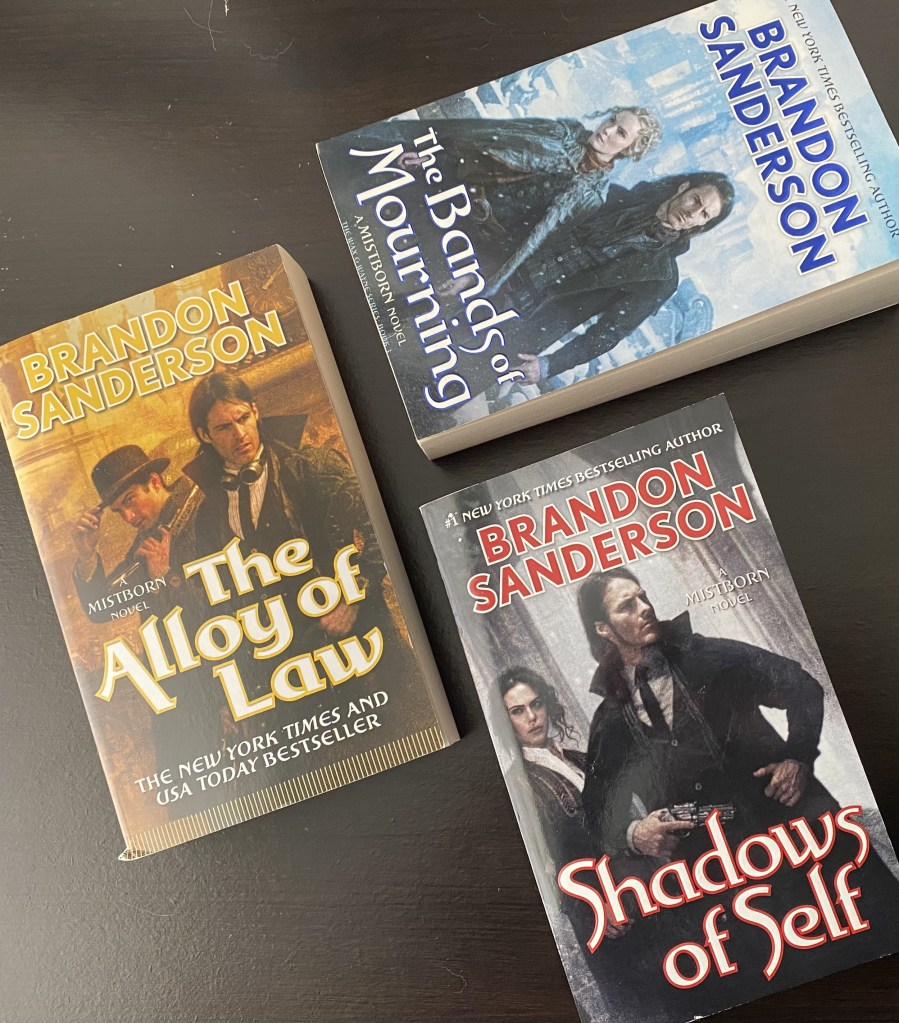
The same problems from the third book persisted in the fourth and final book, The Lost Metal. The fourth book’s focus on setting up future projects in the cosmere—a problem I had with Wind and Truth—also detracted away from the main story, particularly in how it took Marasi away from another final adventure with Wax and Wayne. I feel conflicted about this, because on the one hand, the idea of the cosmere and interconnected worlds and how all of his magic systems use similar basic rules is interesting, but the inclusion of alternate magic systems and hints of other worlds did not seem necessary to this particular story (even if it is setting up future eras). Some of the scenes at the end took away from the overall ending to the specific series. It felt more unresolved, like Wind and Truth, except with Mistborn Era 2, the point is to end a series with these characters, presumably never to come back. It wasn’t as egregious as Wind and Truth, but for a casual cosmere reader, it can be confusing and hard to keep track of what’s referencing other material. I barely remembered the first Mistborn trilogy going into this, so keeping track of everything cosmere so far? Challenging. Very challenging.
The other thing that felt off about The Lost Metal was the character arcs for Wax and Wayne. In Wax’s case, his story felt rather complete at the end of The Bands of Mourning, with the exception of one dangling loose plot thread, so his identity crisis felt forced and tacked on in this final book. I don’t think it was needed. And Wayne, though he needed a character arc to resolve some things, his emotional arc similarly felt tacked on. I’m not sure if that’s because he didn’t get much of a character arc spotlight in previous books, or if the action didn’t leave enough breathing room for him to really have a well-developed inner conflict.
But enough about what I’m critical of. Some other highlights of Mistborn Era 2 include the action sequences. They were genuinely exciting to read, and the mix of an established magic system with a technologically-advancing world made for an interesting combo that added intrigue to the story overall. It was unique. I also really liked the character Steris; she stands out as a unique Sanderson character, and one whose extreme attention to detail and order was relatable. She also had some tender moments, and was a highlight of The Bands of Mourning where she really gets her first chance to shine. Her characterization and her relationship with Wax was one of my favorite parts of the series, which I did not expect to happen when she was introduced in the first book.
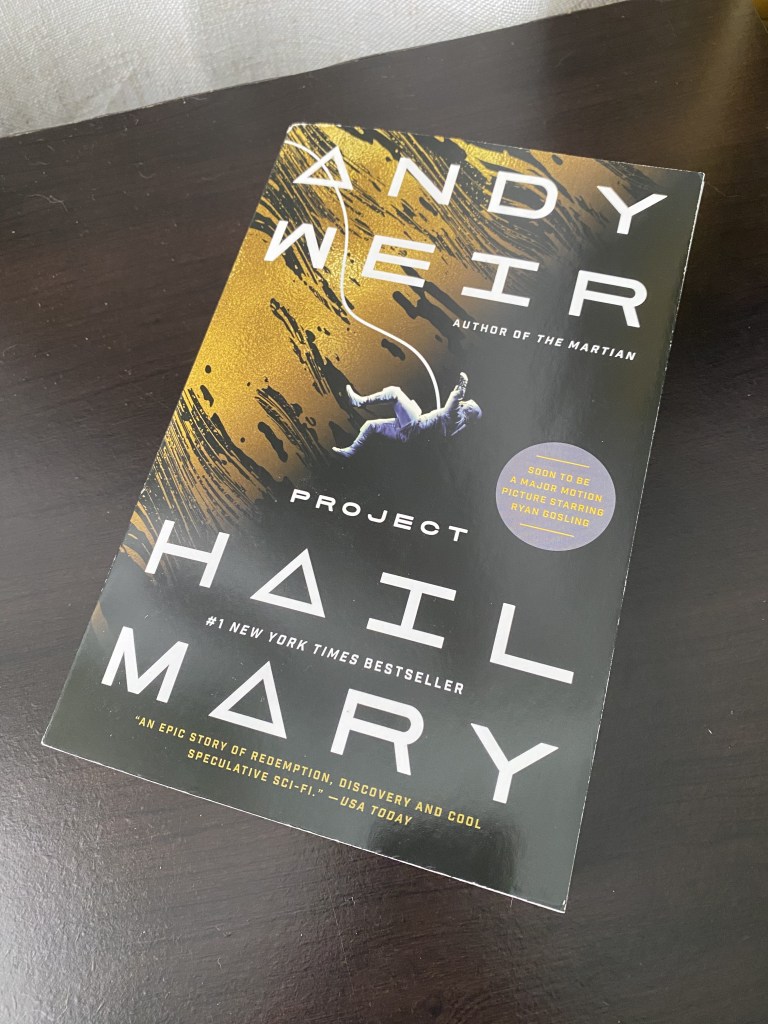
Project Hail Mary by Andy Weir (5/5 Stars): I picked up this book because (1) my new sister-in-law loves it and (2) I wanted to read the book before the movie came out. And WOW I loved this book. Excellent pacing, excellent in-the-main-character’s head writing, and excellent narrative. Even characters who only appeared for a single page were so well-written, they stuck with you. This book was incredibly hard to put down and I loved all of it. Cannot recommend it enough. (And the movie is fantastic as well!)
The Fall of Arthur by J. R. R. Tolkien (4.5/5 Stars): As a medievalist, I thoroughly enjoyed this draft of Tolkien’s version of Arthur’s final moments told in alliterative verse. The book also includes interesting commentary about potential source texts, the changes to the drafts, and its connection to the medieval tradition of Arthur. My only major qualm with the book: it’s pretty short and the poem itself is unfinished, which is a bummer, as it was off to a very neat start. For any Tolkien and/or Arthur fan, this is worth reading.
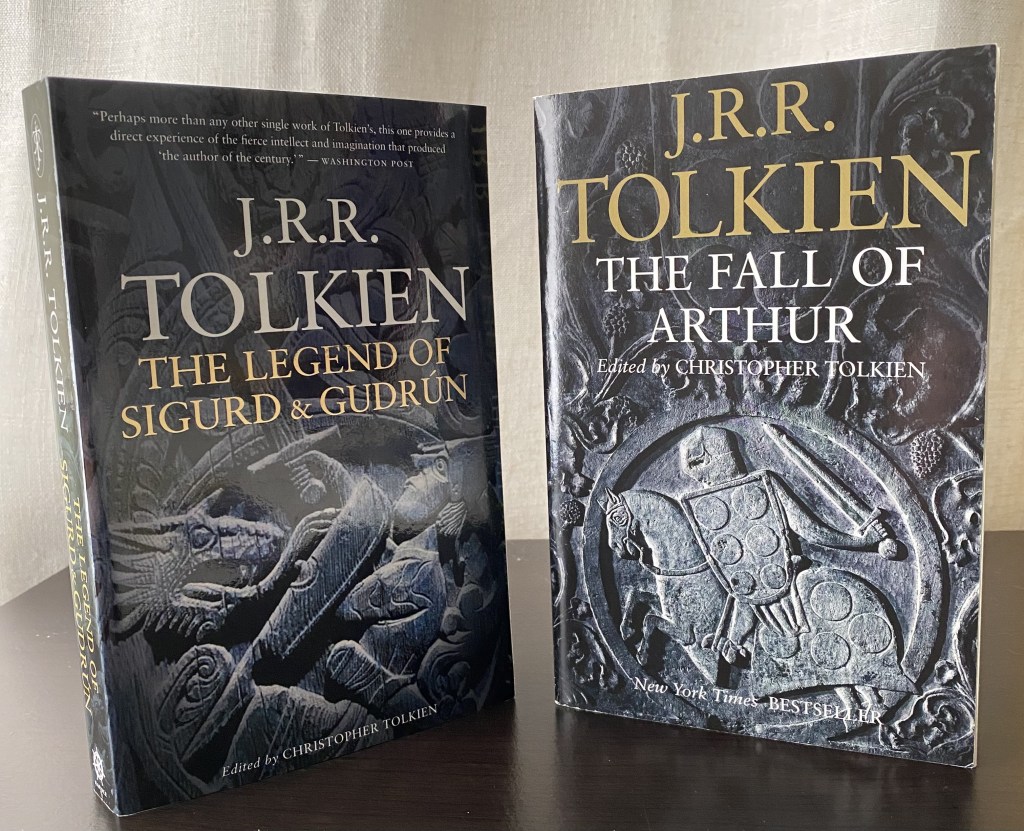
The Legend of Sigurd and Gudrun by J. R. R. Tolkien (4/5 Stars): Similar to The Fall of Arthur, these poems were a fascinating glimpse of Tolkien’s thoughts on Norse poetry and his own versions of the Sigurd and Gudrun stories. Admittedly, these myths are pretty dark and not my favorite, and I find the Norse meter they’re written in to be not as compelling as the Old English rhythm. But it was still an interesting read as a literature scholar and Tolkien fan.
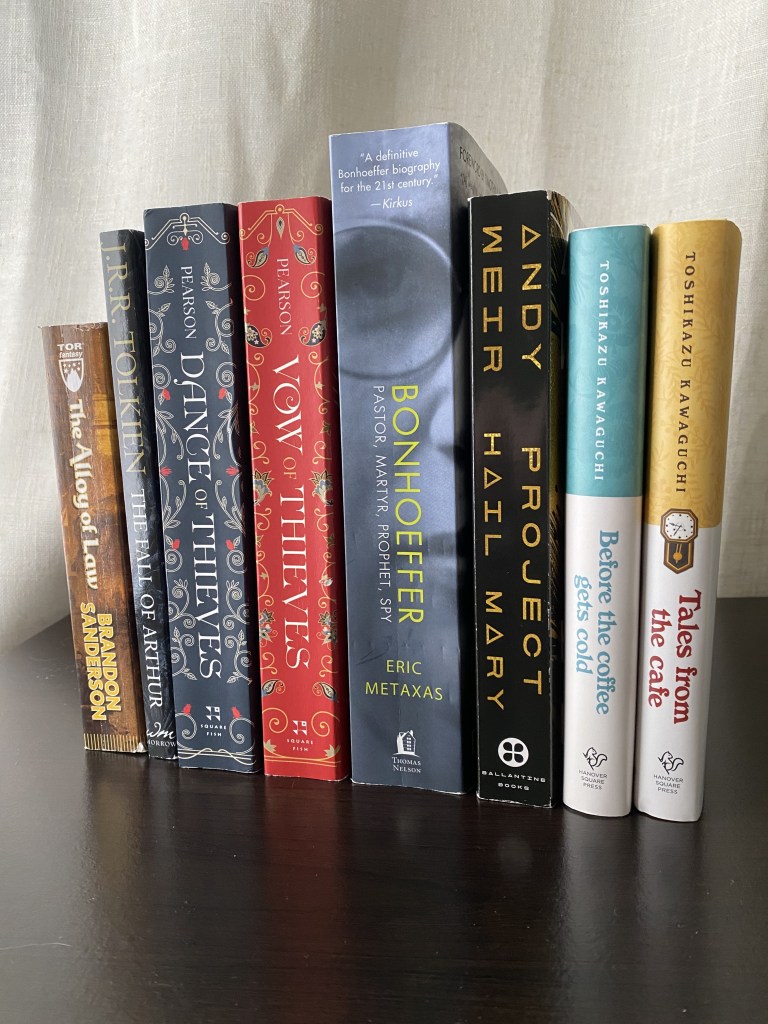
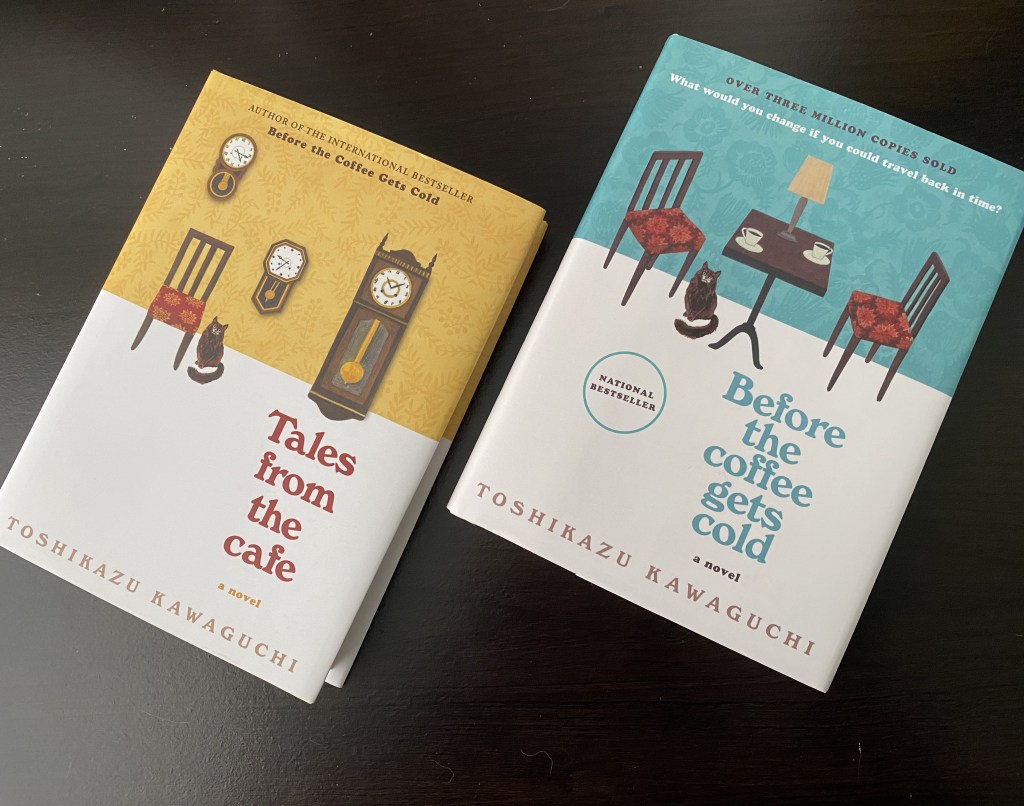
Before the Coffee Gets Cold & Tales from the Café by Toshikazu Kawaguchi (5/5 Stars): I read these novels out of order, though both are somewhat standalone. In any case, both were hard to put down; I read the second one in essentially a single sitting on a flight to New York. Both were a delight of a read. They are about a time traveling café (somewhat of a simplification) and the people with regrets who attempt to reconcile with their past or a future that will never be. In each book, the four chapters function as their own standalone short stories, though earlier chapters also set up later stories, characters, and twists, which adds some cohesiveness to each book. Both were charming, heartfelt, and made me want to read more of the series. Definitely keepers for my bookshelf, and books I highly recommend.
Dance of Thieves & Vow of Thieves by Mary E. Pearson (4.5/5 Stars): Another pair of books that kept me hooked, this duology had many a turn, romantic tension, and a captivating story world. The tension keeps building throughout, and just when you think things might go right, something else goes terribly wrong. The dynamic between the main characters, Kazi and Jase, is full of chemistry, and yet each character also battles with their own conflicting motivations throughout, which adds depth to the external plot. Overall, these books were a very intriguing ride. I’m curious in the other books by Pearson set in this world as well.
Bonhoeffer: Pastor, Martyr, Prophet, Spy by Eric Metaxas (5/5 Stars): Ending on a nonfiction recommendation, Metaxas’s biography of Dietrich Bonhoeffer was excellent. Bonhoeffer is a fascinating figure: a man who stood for Christian orthodoxy in defiance of the Nazi takeover of Germany. This biography is a thorough look at Bonhoeffer’s life, interspersed with context of how the Nazis invaded the German church, which helps make the fullest sense of Bonhoeffer’s work in ministry during his life. The biography also uses a lot of Bonhoeffer’s own words and the words of others to tell the story, and the parts written by Metaxas are gripping. I don’t read many biographies, but this one stands out to me as well-written and worthwhile.

