
As an English Literature scholar-in-training, I’ve found a love for the earliest of the English language tales. Medieval literature (including and ESPECIALLY the Old English stuff) is becoming a fast favorite era of mine. And, to a degree, it has been for a while. Back in my undergraduate days at Baylor University, my favorite classes involved medieval texts. So when it came time to pick my master’s thesis topic, Old English poetry seemed an easy pick. (It was that, or Tolkien.) So, as I’m trying to teach myself Old English (which is basically a whole different language), write a thesis (don’t ask me what it’s about, I have no clue), and reading medieval literature for fun, I thought to myself: why not throw in a blog post about this era of literature, too? So here we are.
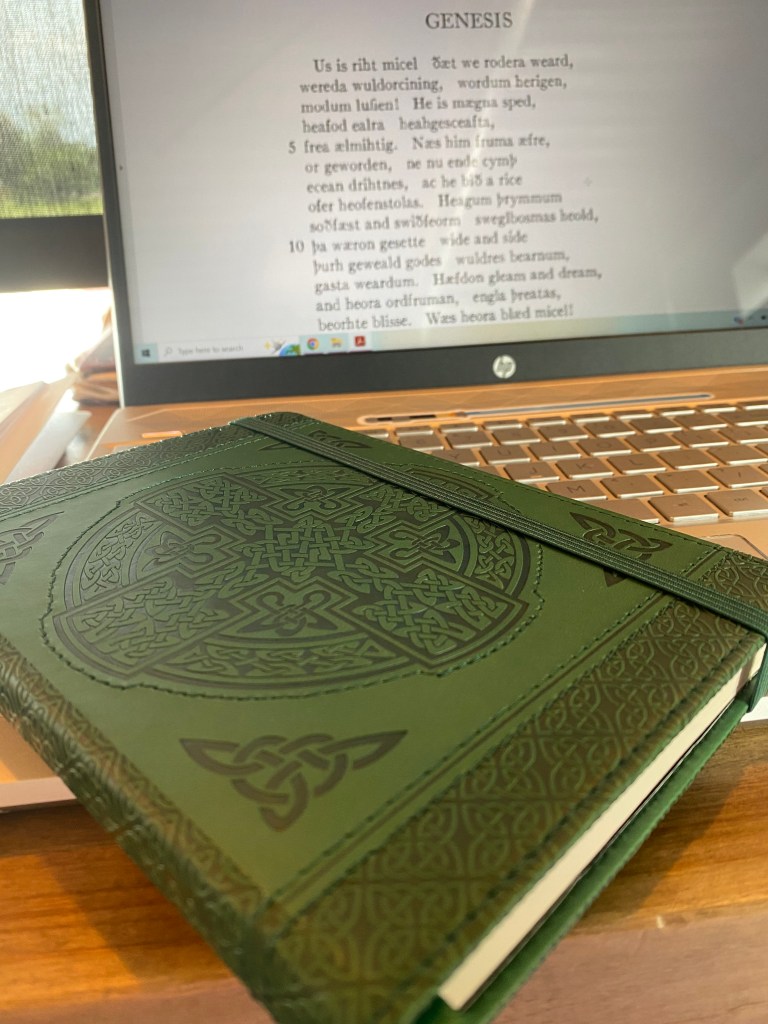
Old English literature comes from the early middle ages (circa 700s A.D.), and one of the reasons I love it so much is its interesting mix of strong Christian themes with the heroic honor culture of the day. As recent converts to Christianity, the Old English writers embraced this new religion with awe and reverence for God and His purposes in their works. Reading the poems from this time has an Old Testament flavor to it, and, indeed, many of their Biblically-inspired poems are based on stories from the Old Testament. Even the more “secular” poems have clear theology based in Christian beliefs about God, His role in the world, and humanity’s relationship to God, as in Beowulf. Very intriguing stuff, and partially the focus of my master’s thesis (which, yes, I still don’t know what it’s about, exactly.)
As the English language evolves into Middle English in the later middle ages, writers continue to have a strong reverence for Christian ideals. Their attention on striving for moral excellence refreshing, in a sense, as there’s a real acknowledgement of the pain caused by sin in many of these tales. While the tropes of righteousness and wickedness are exaggerated in many medieval tales, they’re probably more honest about the state of humanity and our need for a Savior (as well as the goodness and great mercy and grace of our Savior) than many Christian works today, in my opinion. To varying degrees, these texts tend to be saturated with a posture of worship for God.
Medieval texts are also incredibly adventurous and creative in their stories and choice of language, especially when retelling biblical stories. The Old English descriptions of God are SO COOL, referring to Him with several honorifics that bring in Scripture and the honor culture of the day, like the “Helm of All Creation” or the “All-Wielder” or the “Victory-Lord.” Jesus’s disciples are referred to as God’s thanes in a few texts, too. Overall, there are some engaging tales with very epic word choice.
If you’re interested in getting into medieval literature and reading it for yourself, here’s some of my favorite pieces. (Side note: Old English and some dialects of Middle English are not readable to the modern English-speaker, so you’ll need to look for a translation of these texts.)
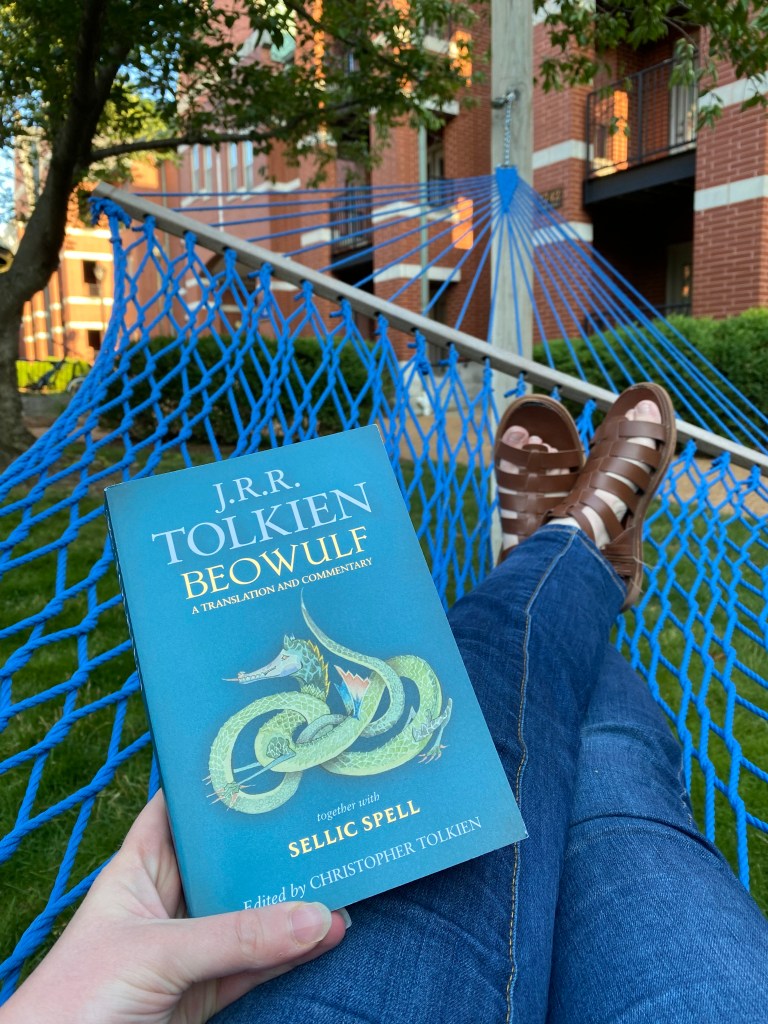
Beowulf – If you’ve never read Beowulf, it is the pinnacle of Old English epic poetry. Perhaps a tad overrated, but it is a classic for a reason, and worth a read. I recently read J. R. R. Tolkien’s translation and commentary, which I thought was a good edition of the text.
The Battle of Maldon– This Old English poem has stuck with me since undergrad, highlighting themes of loyalty and camaraderie. Tolkien’s edition of it recently released, so I’m looking forward to revisiting it through my favorite author’s eyes.
The Dream of the Rood– This Old English poem is from the perspective of the Cross of Christ, with some fascinating theology and heart-wrenching depiction of the crucifixion.
Andreas– An Old English poem I’ll cover in one of my thesis chapters (that is one thing I’m certain of, at least), it’s now become my favorite medieval poem. It follows Andrew, one of Jesus’s disciples, on the mission field, and is full of battle imagery as he pushes back against the forces of darkness by Christ’s power. Very intriguing read and story.
Sir Gawain and the Green Knight– Now we move into more Middle English era. Sir Gawain is as much a classic of this era as Beowulf is, and it’s clear to understand why. It’s a gripping adventure, despite its repetitive motifs, and has a strong, clear moral message that comes with the twist at the end. Such a good one, and probably my second favorite tale on this list.
“The Knight’s Tale” from Chaucer’s Canterbury Tales – All of The Canterbury Tales are great (well, to varying degrees), but “The Knight’s Tale” is definitely my favorite from his work. The Canterbury Tales as a whole is a classic, but I advise caution if you decide to read the whole thing. Many of Chaucer’s tales in that work are crass, but I do find Chaucer’s commentary on religion interesting, as he certainly critiques the opulence of the clergy and praises those who seem to have a more true religion. It’s almost proto-church reformation, though to what degree is debatable. But I digress.
The Wakefield Second Shepherds’ Play– Medieval towns used to put on plays of Biblical stories. The Second Shepherds’ Play follows the shepherds who visited Christ on the night of his birth, and it’s a clever and comedic tale with a somber (yet joyous) ending. I would love to try and produce a modern reenactment of it someday (though the Middle English terms do make it difficult for today’s audience to understand).
Sir Thomas Malory’s Morte Darthur – As a disclaimer, I haven’t read Morte Darthur in entirety, but I have read excerpts and find it extremely compelling. Most of our modern understanding of the King Arthur tales come from this text, which essentially compiled and innovated on the Arthur legends circulating during the time. It’s on my list to read the full work someday.
 By Madelynn Orion